Menu Close

Heraklion

El área de Heraklion es la isla más grande y más poblada de Creta. Tiene importantes tesoros arqueológicos, una serie de pueblos pintorescos, extensos valles con olivos y viñedos, y una de las infraestructuras turísticas más organizadas de Creta. Se encuentra entre las montañas Idi (Psiloritis) al este y las montañas Dikti (Lasithiótika) al este.

Heraklion is an attractive destination throughout the year due to its unique combination of urban landscapes and natural resources. The city of Heraklion vividly reflects the various civilizations that have flourished over the centuries, with Byzantine architecture coexisting with Venetian and Ottoman constructions. The symbol of the city is the 16th century Koules fortification, which dominates the Venetian harbour.

Heraklion's fortifications, the tomb of the Cretan writer Nikos Kazantzakis, the Chanioporta with the lion of Saint Mark from 1570, and the Koule Fortress near the old Venetian port are among the city's most prominent monuments.

The Beaches of Heraklion

The beaches in the north of the island are well organized and crowded. Amnisos, Gouves, Analipsi, Hersonissos, Malia, Linoperasma (the closest beach to Heraklion), Agia Pelagia and the neighboring beach of Lygaria are among the best known.

The beaches on the south coast are disorganized, but they are the least frequented and offer a special charm. Kommos, Matala, Kaloi Limenes and Agia Galini are the best known beaches.

Where civilization began...

Knossos, one of the most important ancient monuments in Europe, is located just 5 kilometers from Heraklion. Knossos was the most important center of the Minoan civilization from 1900 to 1400 BC. C., and was devastated by a tsunami caused by the eruption of the Santorini volcano in 1450 d. C. The largest palace in Minoan Crete was in the Knossos region. The remains of the Palace of Minos, the houses of authorities, priests and inhabitants, as well as cemeteries, can be found in the region. The palace was built in a complicated pattern around a central courtyard. It was 22,000 square meters and housed royal offices, rooms of worship, treasury, workshops and warehouses.

The ruins of the Palace of Phaistos, the second most important palace-city of Minoan Crete, are located 63 kilometers southwest of Heraklion. The architectural style is similar to that of Knossos. The palace was around 9,000 square meters in size. Excavations near the town of Malia, 34 kilometers east of Heraklion, found another palace identical to those at Knossos and Phaistos.

The ruins of the Palace of Phaistos, the second most important palace-city of Minoan Crete, are located 63 kilometers southwest of Heraklion. The architectural style is similar to that of Knossos. The palace was around 9,000 square meters in size. Excavations near the town of Malia, 34 kilometers east of Heraklion, found another palace identical to those at Knossos and Phaistos.

Destinations

in Crete

Chania

The Chania region, one of the most impressive in Crete; stroll through the old center and discover the exotic beaches of Elafonissi and Balos, among others.

Heraklion

A unique combination of an urban landscape and the natural wealth of Crete, makes the Heraklion region an attractive destination throughout the year.

Lasithi

Lasithi in Crete is a fascinating world waiting for you to discover; the mythical palm forest of Vai, the Gulf of Mirabello, beaches with crystal clear waters and luxury hotels.
Rethymno

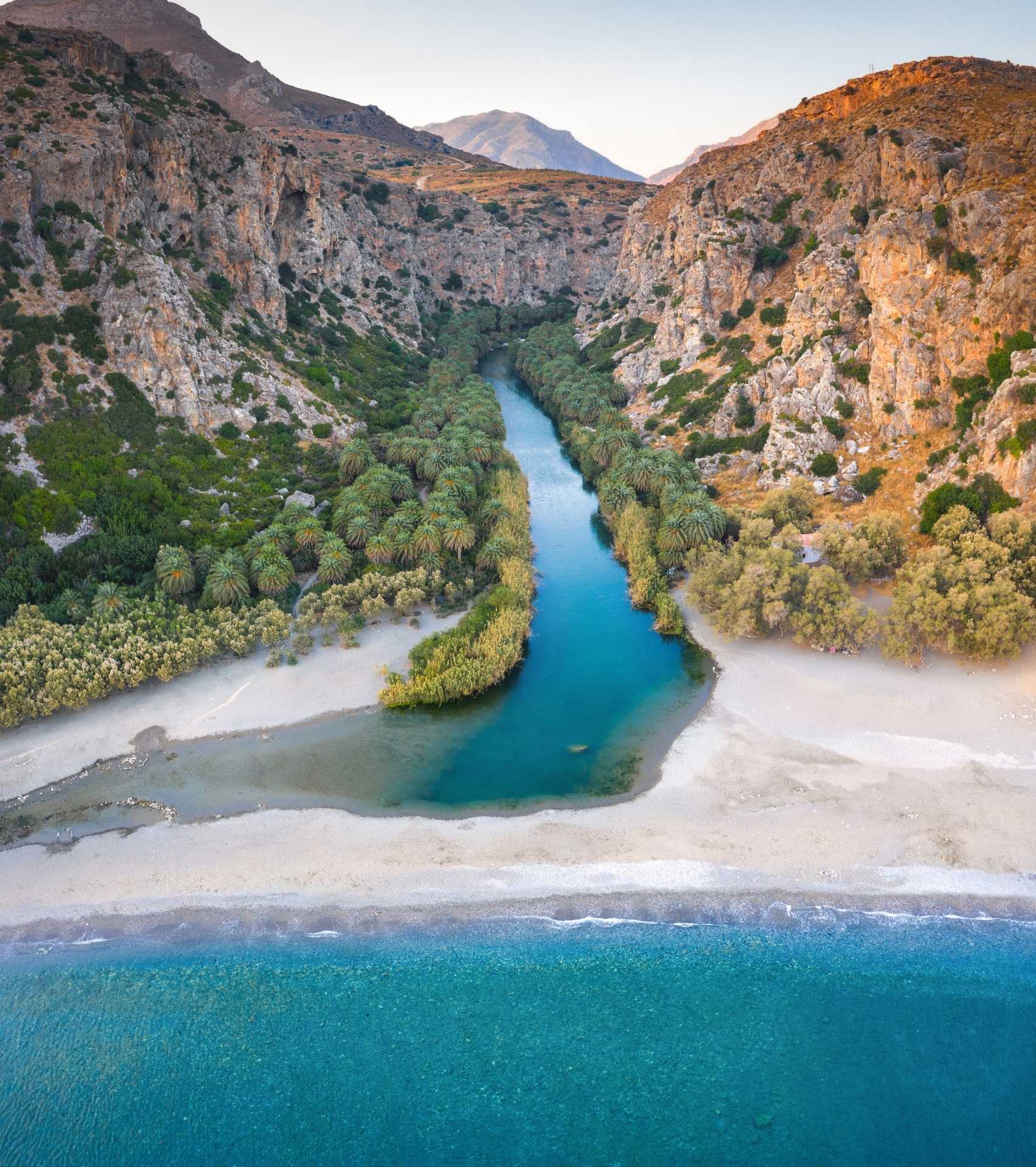
Rethymno is synonymous with beautiful mountainous landscapes, marvelous beaches, Cretan lyre melodies, “tsikoudia” and Cretan tradition.