Menu Close

Ithaca

Rugged Ithaca, Odysseus’s legendary homeland, has yielded no substantial archeological discoveries, but it fits Homer’s description to perfection: “There are no tracks, nor grasslands … it is a rocky severe island, unsuited for horses, but not so wretched, despite its small size. It is good for goats”.

In Constantine Cavafy’s splendid poem Ithaca, the island is symbolized as a journey to life:

When you set out on the voyage to Ithaca
Pray that your journey may be long
Full of adventures, full of knowledge.

Despite the romance of its name, and its proximity to Kefalonia, very little tourist development has arrived to spoil the place.

A special island

Vathy is the main port and capital of the island. This snug town is compact, relatively traffic-free and boasts the most idyllic seafront setting of all the Ionian capitals. Like its southerly neighbors, it was heavily damaged by the 1953 earthquake, but some fine examples of pre-quake architecture remain here and in the northern port of Kioni. Vathy has a small archeological museum on Kalliníkou, a short block back from the quay.

There are two pebble beaches within 15-minute walk of Vathy: Dóxa, over the hill above the ferry quay, and tiny Loútsa, opposite it around the bay. Beaches at Sarakiniko and Skínos are an hour’s trek along paved roads.

Looking for Ulysses

Vathy is located just a short walk from three of the main attractions. The Arethusa Spring, where Odysseus's faithful swineherd Eumaeus is said to have taken his animals to drink, is a three-hour walk along a marked trail next to the coastal telecommunication office. The hike goes through slippery slopes and is best avoided if you have a fear of heights. The unspoiled but unshaded terrain and sea views are impressive, but the route covers treacherous inclines and is best avoided if you fear heights.

Near the top of the lane leading to the spring path, a signpost points up to what is said to have been the Cave of Eumaeus. The route to the spring continues for a few hundred meters and then branches off onto a narrow footpath. The ravine sits below a crag known as Korax (the raven), which matches Homer’s description of the meeting between Odysseus and Eumaeus. You have to return by the same route but this way, you will have some time to swim in a small cove, a short scramble down from the spring.

At the top of the hill above Dóxa beach, the Cave of the Nymphs (Marmarospli) is about 2.5 km along a rocky but manageable route. The proximity of Doxa beach to the narrative that this is where Odysseus hid the treasures given to him by King Alkinous is reinforced, while there is some evidence that the "real" cave existed just above the coast and was unintentionally damaged. during extraction many years ago. .

Heinrich Schliemann's "Ulysses Castle", Alalkomenae, is located on the Vathy-Pisaetos road, offering views on both sides of the island. The remains discovered by Schliemann include a Mycenaean burial chamber, as well as household items including vases, figurines, and utensils (now on display in the archaeological museum), yet they date to three centuries after Homer. In fact, the most plausible location for Ulysses' fortress is above the village of Stavrós.

Stavros, the second largest village on the island, is a charming place, with kafenia (cafés) around a small square dominated by a somewhat ferocious monument to Odysseus. The Homeric site of Stavrss is located on the side of the Pelikata hill, where traces of roads, walls and other constructions have been identified as the location of Odysseus's citadel.

From Stavros, a picturesque mountain road travels 5 kilometers southeast to Anogi. A free-standing Venetian bell tower stands in the center of the village. On the eve of the Assumption of the Virgin, August 14, don't miss the annual "panigiri". 

The ruins of a destroyed medieval jail can be seen on the outskirts of the village, and the surrounding countryside is home to numerous bizarre rock formations, the largest of which is the eight meter high Iraklis (Hercules) rock, located just to the east of settlement. Katharon Monastery, 3 kilometers to the south along the route, offers stunning views of Vathy and the south of the island. On September 8, the monastery has a celebration with services, processions, and music.

Kióni was spared the brunt of the 1953 earthquakes, preserving several magnificent displays of pre-World War II architecture. It is a beautiful city that wraps itself around a small port. It has a kilometer long beach on its southern side. In the quieter settlement of Frikes you can find beautiful pebble beaches within walking distance.

Destinations

in the Ionian Islands

Kefalonia

Kefalonia which belongs to the Ionian Islands, has a rich cultural heritage along with impeccable scenery. Visit its impressive beaches and the famous caves and discover this fantastic island.

Corfu

In Corfu you will feel like you are in an Italian fairy tale. Let this beautiful island mesmerize you.

Ithaca

Ithaca, the home of Odysseus, an island with very little tourist development but of incredible beauty invites you to discover it. And surely, it is worth it!

Kythira

In the southern Peloponnese, Kythira is one of the islands that, despite its incredible beaches and important history, offers tranquility and the perfect vacation.

Lefkada

Lefkada is one of the islands accessible by car with incredible beaches of infinite blue and amazing towns.

Paxoi

Unusually green and still largely untouched, Paxoi (Paxos) has established a firm niche in Greece's tourism hierarchy
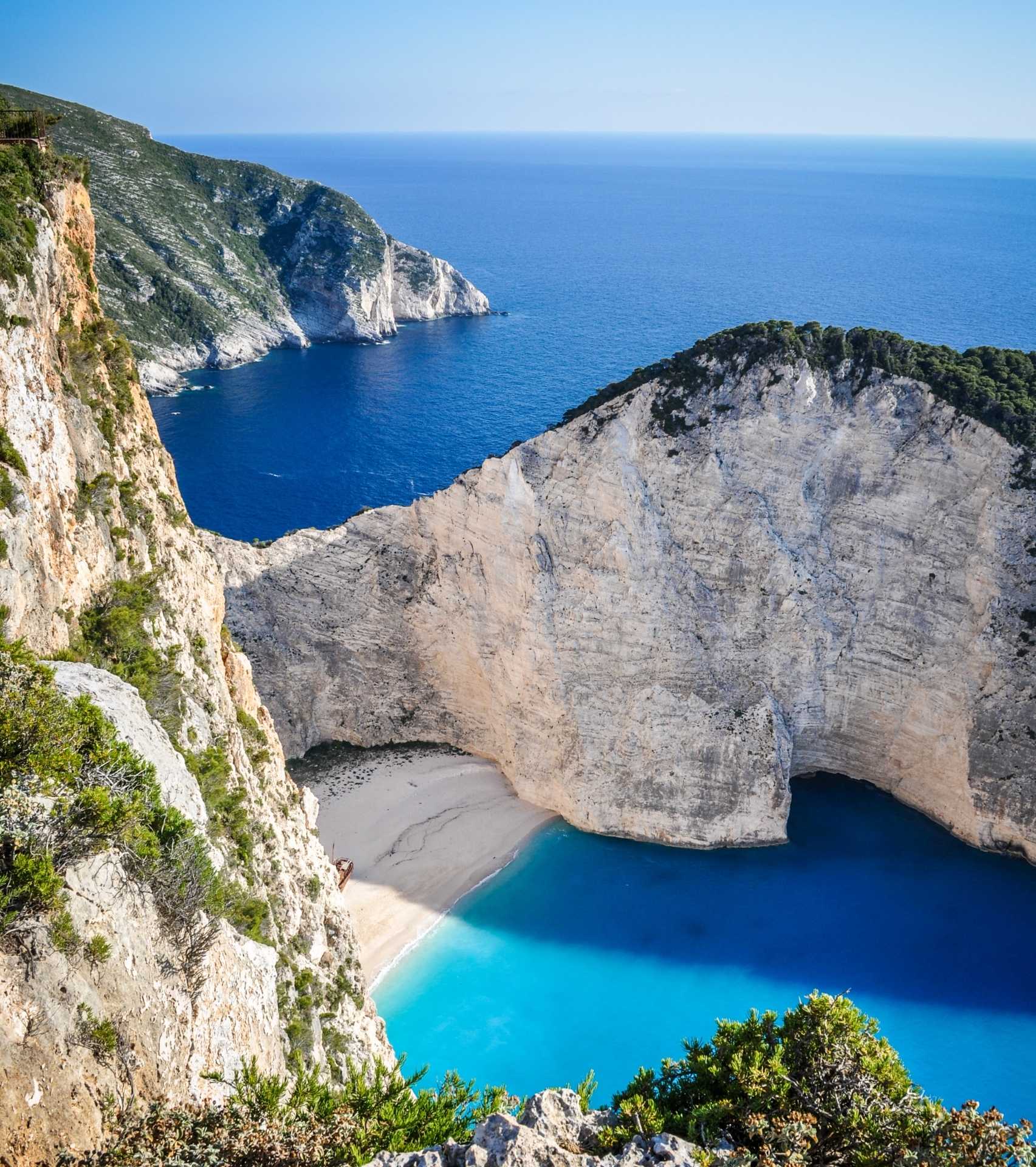
Zante (Zakynthos)

In addition to the Shipwreck, the most photographed beach in Greece, in Zante (Zakynthos) you will be amazed by its traditional character, hospitality and wonderful natural scenery.